About
How do political institutions and organizations shape the distribution of development resources, capital, and economic opportunities within and across countries? Under what conditions do foreign aid and development finance promote economic development, political legitimacy, and democratic change? And when do they reproduce existing inequalities? How do donor governments, international organizations, development finance institutions, and private actors define development priorities and determine which countries, places, firms, and groups gain access to public and publicly backed resources? These questions motivate my research at the intersection of international and comparative political economy, global governance, democratization, and development.
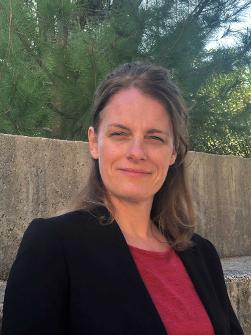
I am Associate Professor of Political Science and International Relations at the University of Geneva in Switzerland. Previously, I was Senior Lecturer in Government and Director of ESSEXLab at the University of Essex from 2015 to 2017 and Assistant Professor of Political Science at the University of Missouri from 2012 to 2015, where I also held an appointment at the Truman School of Public Affairs. From 2011 to 2012, I was a Postdoctoral Research Associate at the Niehaus Center for Globalization and Governance at Princeton University. I received my Ph.D. in Political Science from Penn State University in 2011. My research has been published or is forthcoming in International Organization, The Journal of Politics, International Studies Quarterly, The Review of International Organizations, European Journal of International Relations, World Development, Journal of Experimental Political Science, Research & Politics, and European Journal of Development Research, as well as with Cambridge and Oxford University Press.
My research combines cross-national and project-level data with individual-level surveys, field and survey experiments, text analysis, case studies, and extensive open-ended interviews. I use these approaches to study political institutions at multiple levels, including donor governments and international organizations to development finance institutions, firms, officials, and citizens in developing countries. Combining evidence across these levels allows me to examine not only how development policies are designed, but also how they distribute resources, risks, and opportunities and how those choices are perceived by the actors affected by them.